
Overview
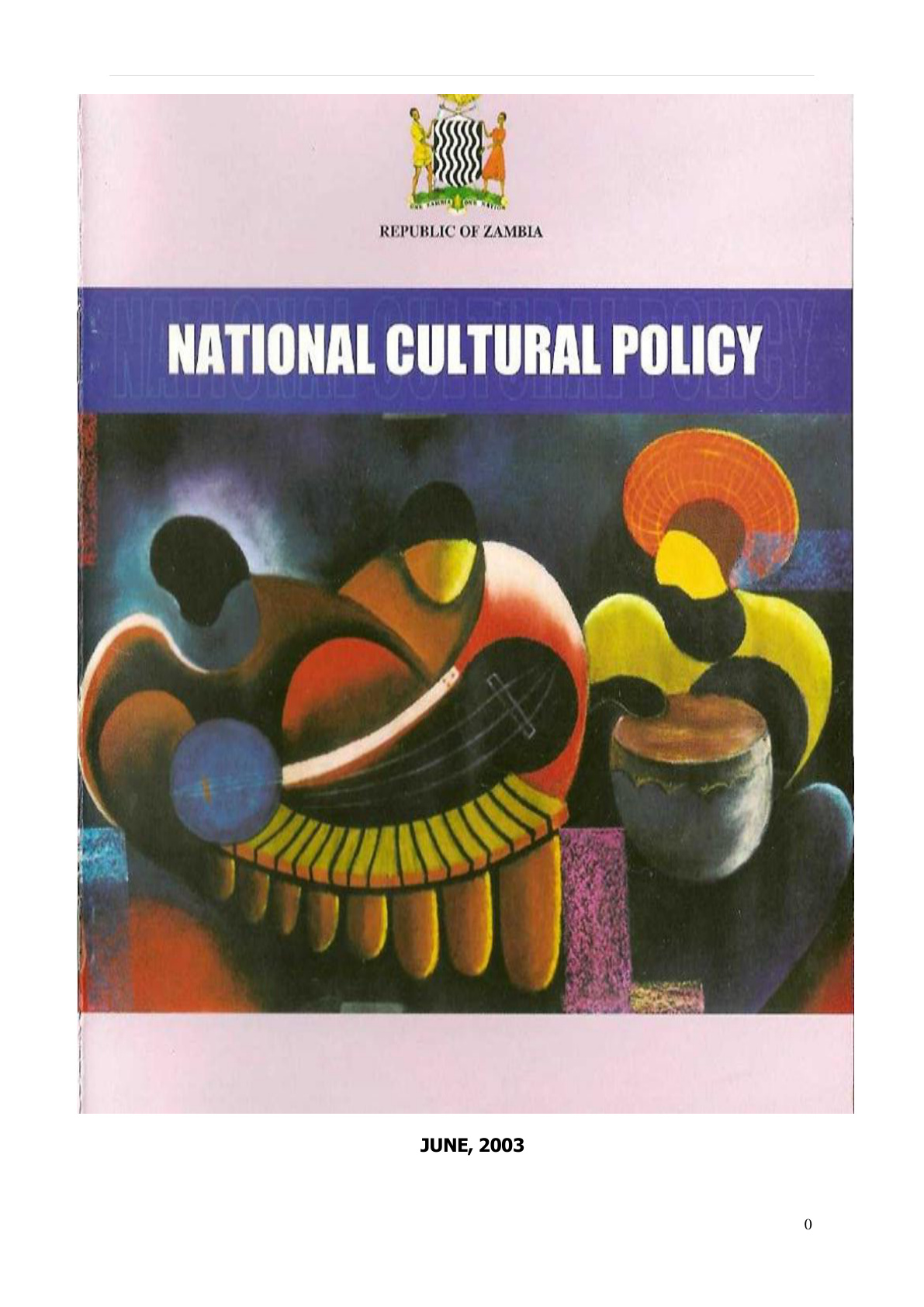
Issued by the Ministry of Community Development and Social Services in June 2003, the National Cultural Policy articulates the government’s vision to integrate culture into development to achieve sustainable human development. It frames culture broadly to include arts, heritage, languages, values, and traditions, and underscores cultural rights and diversity across Zambia’s 73 ethnic groups. The policy outlines objectives and strategies across seven areas: culture and democracy; cultural identity; cultural heritage; artistic and intellectual creation and art education; culture and development; international cultural cooperation; and administration and coordination. Measures include decentralizing cultural services, strengthening language instruction and adult literacy in local languages, protecting movable and immovable heritage, investing in cultural infrastructure, and providing tax incentives for cultural industries and community museums. Institutionally, it proposes an Inter-Ministerial Cultural Committee and establishes provincial and district cultural affairs coordinators to improve coordination and service delivery. It calls for reviewing relevant legislation, enhancing copyright awareness, and supporting resource mobilization through national budgets, community participation, private sector and NGOs, and cooperating partners. Monitoring and evaluation instruments will guide implementation and service delivery.